Archive for 'Stories'
LYKKENS GAVE - Fortunes Gift
March 14th, 2017. Published under Fortunes Gift, Lykkens Gave, Refugees, Stories. No Comments.
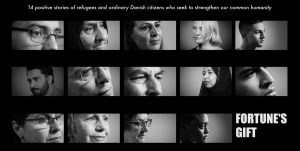
In the wake of the refugee crisis that has swept across Europe, and the negative sentiments expressed through our politics and media, “Fortune’s Gift” opens a window into the lives of 14 individuals, both refugees and ordinary Danish citizens, who have made a conscious decision to embrace what connects us as human beings rather than what divides us.
FOLLOW LINK TO SEE FULL INTERACTIVE MEDIA PROJECT: http://altamar.tv/lykkensgave/eng/#FORTUNE_GIFT
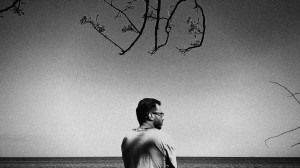
We were granted permission by the Lyngby-Taarbæk Municipality to have access to a beautiful old building called ‘Lykkens Gave’ (meaning Fortune’s Gift), which was donated to the community in 1915. The building was donated with the purpose to serve as a place of refuge for old people suffering from dementia. It has served its purpose for 100 years, and now the empty building has begun a new chapter as a place of refuge for refugees in the community.
For this reason, we have chosen to give this project the same name: Fortune’s Gift.
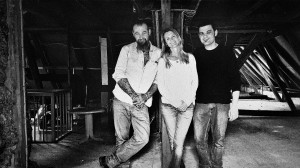
A special thank you to our incredible team. Pep Bonet (filmmaker), Jose Bautista (sound and multimedia editor), Miriam Dalsgaard (photographer) and myself.
Your talent is inspiring - it was a real priviledge to work alongside you. Thank you for all you gave.
LYKKENS GAVE - Fortunes Gift
March 14th, 2017. Published under Fortunes Gift, Lykkens Gave, Refugees, Stories. No Comments.
Interview and article written by Pia Euler-Vestey
Last year, about 3′500 refugees died trying to cross the dangerous route over the Mediterranean In response to the negative reputation of the refugee crisis a woman named Line Hadsbjerg began an inspiring journey. When Line introduced herself she said “My name is Line and I would like to call myself a story-teller. I think there is great power in story telling. I think that human stories are the ones that touch us and when we’re moved and touched emotionally then that’s when we act, that’s my work. I’m a mother, I’m Danish and South African and I live in Spain. I am passionate about human stories. Using those stories to have a positive impact in the world.”
Line started a project called Fortune’s Gift. This projects slashes through the physical, emotional and psychological boundaries that politicians and citizens of Europe have put up. Fortune’s Gift is a series of interviews with Danish citizens and refugees that have immigrated to Denmark. It’s purpose is to share their positive stories and showcase the fact that politicians, refugees and citizens are at the end of the day all people.
People are calling this time period the technology era, which as many would agree is the obvious truth. With pictures of drowned refugee children breaking the internet and becoming the face of the desperate movement to safety, Line also thought of this knowing that the interviews would end up on the Politiken website. During the interview, when asked what the first step was, she said: “I was constantly sitting with a mobile phone in my hand and thinking how do we combine all of this to create a project that combines the story telling with the visuals but is also made for the digital space.”
As everyone is guilty of using their phones more than they’d like to admit, putting such a fantastic project onto the digital space is a perfect idea. At the same time some of the interviews follow the hardships of the refugees and so to deal with the emotional aspect of listening to these interviews Line says “I think doing Into the Shadows, which was about refugees coming into South Africa, prepared me for the toughness of the stories. Because that was quite successful, I also saw that there is great power in visual story-telling. I think all the other projects that I’ve done since, going from my first book Remarkable South Africans through to the films and the likes of GIRLZTALK and where you’re constantly having to interview people and try to capture the pearls that they carry within them. The art is to capture their essence.”
Obviously getting interviews with refugees would seem difficult but when I asked Line what the solution was she surprised me with something quite innocent. Line [laughing]: “With a lot of cake and coca cola… because what I did find, at least among the Syrian refugees that I met, the moment you were let through the front door you were offered endless cake and coca cola. We sat there for hours eating and chatting and building trust.” To find some common ground seemed to be key when interviewing a refugee because they’ve seen so much and they’re wary.
Line’s journey has yet to end as she plans to expand the project. “I would like to see this project travel into other countries in Europe. I’d like to gather these positive stories of humanity that create that common thread that connects us all as human beings. I’d like it not to be just a Danish story, I’d like it to be a European story. I’d want to overcome some of those barriers, both physical and emotional and psychological that we’ve created around the refugee crisis. I’d want this project to confront that and to bring in a smile, an emotion and a sense of awareness that we’re all connected as human beings. My vision is for it to grow and for it to have a life that goes beyond just those individual stories.”
SEE FORTUNES GIFT INTERACTIVE MEDIA DOCUMENTARY: http://altamar.tv/lykkensgave/eng/#FORTUNE_GIFT
WOMEN
January 28th, 2016. Published under Stories. No Comments.
“Each time a woman stands up for herself, without knowing it possibly, without claiming it, she stands up for all women.” Maya Angelou
They say life is full of strange encounters. That people enter and exit your life for a moment, a season or a lifetime.
At a dinner, whilst attending CPH:DOX (one of the world’s leading documentary film festivals) I had a surprising encounter – it lasted just for a moment.
The dinner was in a restaurant in the magical Tivoli Gardens in Copenhagen. It was two days before the official Christmas opening, so busy-workers were hanging up lights and decorations. It was dark, as we followed the beautifully lit path to the restaurant – the air felt cold and filled with the promise of Christmas - and all of Santa’s helpers (called Nisser in Denmark) were preparing for the season of magic to begin. The making of a fairytale…
Chance would have it that I sat next to stranger at dinner – a charming man – I guessed him to be in his late 50’s, with a deep French accent and an open smile. The stranger was Yann Arthus-Bertrand, an accomplished and inspiring film director and photographer.
Ironically, only the week before, I had discovered his latest film HUMAN online, and was captivated by its powerful storytelling and imagery.
In the film, Yann succeeds in drawing a thread across the continents - from individual story to individual story – he weaves this thread into the tapestry we call Life.
HUMAN binds us as human beings in the realisation that in our diversity lies our strength, our common humanity, our deeply rooted desire to express our love, to live our freedom, and to find peace.
I was captivated and thought: it must be the magic of Tivoli!
Over dinner, Yann shared that his next film was going to be about WOMEN.
My heart roller-coastered.
My first thought was: I want to be part of making that film! Take me with you on your expedition to discover the essence of being a Woman.
…and as unexpectedly as the evening began, so it ended…but my mind continued to scan the social landscape of Womanhood.
I think of the women in my life who live(d) with passion, resilience and strength: my mother, my African mother, my godmother, my friends, the lineage of great women that came before me and those who will come after me, my daughters…
This is my small tribute to Women:
“Just like moons and like suns,
With the certainty of tides,
Just like hopes springing high,
Still I’ll rise.”
― Maya Angelou, from her poem ‘Still I Rise’
Special thanks to: Pep, Jose & Guni xx
In too deep!
April 22nd, 2015. Published under Stories. No Comments.
Standing at 2.670 meters, looking out over the spectacular snow covered peaks - I pause for a moment and breathe.
I am on a freeride ski tour, guided by professional freerider Lorraine Huber, a composed, confident and experienced skier. We are part of a 4 day letsgofreeriding event in Obergurgl, Austria, where business meets freeriding, in one of Europe’s best freeriding locations, guided by some of the world’s best riders and mountain guides.
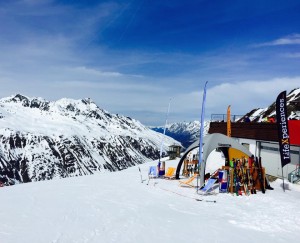
Letsgofreeriding.com
I have already been skiing for a week, but this is my first day of freeriding, and my legs are aching. I look at my watch and think, ‘Just 30 minutes until lunch.’ In my moment of pause I scan myself, my physical strength, my ability to continue with this fun group of accomplished skiers. Feeling rather less-accomplished and tired, I sense an inner voice telling me it is time to take a break.
Lorraine is scouting the mountain face cascading below us. She is looking over the back of the peak - opposite direction to the pist - and my heart sinks as she gives us a thumbs up and calls us over to join her. I ski forward to ask her if she thinks I can manage the ski run, that my legs are tired and does she think I can handle? ‘Yes, I think you will be fine,’ she says confidently.
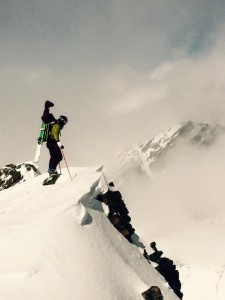
Lorraine Huber checking out the terrain
Others in the team put in a word of support, and I push my inner voice aside and decide to stay with the group. But in that moment I have a flash back of boarding a bus on the border between India and Nepal where the same inner voice was telling me to stop:
I was heading for Pokhara, a town at the foothills of the Nepalese Himalayas. Although I was travelling alone, I had planned to go trekking, and was looking for a bus that would get me there.
A persistent driver pushed me in the direction of a bus, saying “Pokhara, Pokhara!” As I stepped onto the bus, I felt my inner-self beginning to stir. Something didn’t feel right. There was a commotion and a man pushed onto the bus holding my backpack – someone had tried to steal it. I placed it on my lap, thanked him for rescuing my belongings and as people loaded onto the bus, my inner voice spoke louder within me: ‘Get off the bus. Get off the bus.’
In that moment the engine fired, and I did not have the guts to create a commotion and demand to be let off. And I had already paid the bus fare.
The bus moved on for hours, climbing up towards the majestic peaks. My foreboding increased as I could see by the direction of the sun we were heading North East – I knew from having looked at the map that Pokhara lay North West.
Hours passed, as they do when travelling in India and Nepal, I began to question other passengers. ‘No, no’ they said, ‘this bus is first making a stop in another town, and then drives on to Pokhara.”
My feeling of dread increased. The day turned to dusk and the bus finally stopped in a bustling town I did not know. I angrily approached the driver, demanding why he had not informed me that he was making a first stop in a completely different direction. ‘Yes, yes madame,’ he replied, ‘we will shortly be going to Pokhara.’
After an hour, the bus was on the move again. The road to Pokhara was spectacular and terrifying. The bus just managed to fit all four wheels onto the narrow winding mountain road, which climbed and clung to the mountainside, with hundreds of metres of cascading cliffs below us. The bus emptied as we drove, and soon I was left alone as the only passenger on the bus, except for the driver and his two friends who laughed and joked, whilst smoking joints and drinking beer in the front of the bus.
I am not sure what frightened me more: the thought of our bus plummeting several hundred meters down the mountainside; or the three drunken men who spoke at me in a language I did not understand, then laughed whilst lighting another joint.
My exhaustion engulfed me. I prayed for protection and fell asleep. We arrived in Pokhora after midnight.
Whilst in Varanasi, I had heard from other travellers that there were some rogue taxi drivers in Pokhara, who instead of driving you to your hotel, they drove you to an isolated place and robbed you of all your belongings. There were always two people in the car, so I was warned that if a second person got into the taxi, to get out!
On arrival in Pokhara a taxi was waiting for me, and I got into the back seat and asked to be taken to Butterfly Hotel. But as the driver started the car and second man got into the front seat next to him. I shuddered and immediately reached to get out of the car, only to realise that the handles on the backseat doors had been removed and I could not open the door! All I recall is grabbing my belongings, scrambling over the man sitting in the front seat, shouting at him ‘Get me out! Get me out!’ and climbing out of the car.
Desperate, I looked for another taxi in the desolate bus station, found a driver who saw an opportunity in my desperation and charged me three times the fee, but drove me safely to Butterfly Hotel. I had to wake the hotel owners to give me access to a room, apologised for arriving so late and pleaded if I could use the telephone and call home.
I swore never to silence my inner voice again.
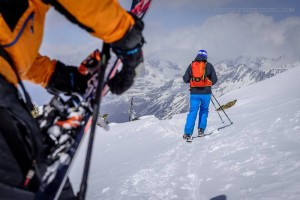
Letsgofreeriding.com
Now, some 17 years later, I am standing at close to 3000 meters in the Austrian Alps. The sky is brilliant blue, and the glint of snow, bright and white and beautiful. My silenced inner voice has left me feeling unsettled. Should I have been bold enough to admit that I felt tired and unsure?
I tell myself all is fine and stick to the group. The first slopes are smooth and easy with a fresh layer of powder. We then start to descend through a narrow gorge and follow the valley around to the front slopes. But the powder soon turns to slush, and the slope gets steeper, and it becomes harder to manoeuvre through the snow. I can feel my thighs burning, as the room for error thins and the conditions become more difficult.
I start to fall.
Our guide is calm and makes clear decisions as to which route we need to take to get down, but we all begin the feel the tension. I feel myself sinking knee-deep into the slush, and boulders of snow roll alongside us, as the looming fear of triggering an avalanche takes its presence in our minds.
Everyone is calm, except my muscles start shaking. I start falling at every turn, unable to balance my weight on both skis, I find myself tipping forward and falling into the snow, causing more snow balls to roll, unnerving the group.
I hear myself laughing nervously, apologising for what I know is a ridiculous lack of coordination, and yet with each turn, followed by each fall down the gorge, I feel my strength seeping from my body. I am no longer in control, and do not have the physical strength to help myself.
Lorraine encourages the group forward, out of the gorge and then to traverse through the valley. She stays back to help me through.
I manage to get out of the gorge, and clumsily, desperately, push myself forward. I ask for some water, which gives me new strength, and we return to the safety of the designated pists and head toward lunch. I grapple between relief and humiliation.
However, my deepest frustration was with myself. I believe we have a sixth sense within us, an instinct, a voice that speaks to our inner selves beyond the wisdom of our conscious minds.
I should have listened. Again.
One of the participants in the group said, ‘You should be proud, you were pushed beyond your limits and yet made it through.’ Yes, I made it through. In hindsight the experience may not have been as dangerous as I my mind imagined, but I have never been so beyond my depth, that had my worst fears become a reality, I could not have helped myself.
I have often been asked, ‘Is it not risky to produce films in dangerous places like the inner city of Johannesburg?’ I always reply, ‘It is not dangerous unless something happens.’
But now I heed the caution in the wind. I leave the white peaks with a lesson learned, one that one-day might just save my life: Be courageous enough to respond to your inner voice.
“Speed is your friend.
Nothing hurts in the air.
Glory last forever.”
quote by Lorraine Huber
Remarkable Palestinians
November 29th, 2013. Published under Nominees, South Africa, Stories. No Comments.
Some months ago, I was approached by an organisation called NIJMAH* (in Arabic meaning ‘star’) asking about my book Remarkable South Africans. NIJMAH* recognises synergies between the Palestinian struggle for freedom and the South African struggle during Apartheid, and believe that there are lessons to be learned from South Africa that could benefit the Palestinian people.
NIJMAH* asked if would be interested in writing another book? Remarkable Palestinians would be a quest to capture the best of the human spirit in those who strive for peace, freedom and dignity in one of the most complex human conflicts in history.
My immediate reaction was – of course! I have never been to Palestine or Isreal for that matter, and welcomed the thought of a new adventure. I believe that the essence of humanity, the spirit of Ubuntu, can be found in all cultures, amongst all peoples, and being on a quest to seek out the best of human beings is an inspiring and an awakening journey of the mind and spirit.
Soon after, one of the founders of NIJMAH*, Jamila (half German half Palestinian) and her boyfriend Omar (Palestinian) came to Mallorca where I met them for a coffee for the first time. We talked, and shared our vision for creating a book called Remarkable Palestinians, and I soon realised that I knew very little of this complex nation.
I also realised that my life had only ever been exposed to the Isreali perspective. Many of my dearest and oldest friends are South African Jews, a community of people I came to deeply respect, know and admire. I remember feeling like a welcomed outsider; wanting to belong, although my cheese burger and Scandinavian blonde hair only highlighted the invisible religious line that I clumsily stumbled across, only to be escorted back into my side of the territory with a broken teenage heart and questioning if love can truly conquer all?
Jamila and Omar came to stay with us for one night. They are a creative and passionate couple. Jamila played the piano and sang for us, Omar told me about his life growing up in the Arab quarter of Isreal. They are both passionate about Arabic culture, music, film and deeply passionate about expressing the Palestinian struggle through art.
We brought out an atlas and they talked me through history. History always depends on those who write it, and is often interpreted through ones own experience and belief. I felt sobered. Saddened as I listened to stories of lives destroyed, and yet inspired hearing of individuals who rise, who seek peace, who are willing to forsake all to fight for freedom through non-violent means. I felt ignited at the great capacity of individuals to serve humanity – and yet I felt utterly confused.
I had agreed to write and produce Remarkable Palestinians on the condition that my writing would be independent, that I would always remain neutral. But my own words bothered me, as the words of Archbishop Desmond Tutu ringed in my conscience – “If you are neutral in situations of injustice, you have chosen the side of the oppressor.”
I realise that I am stepping into an emotional minefield. I may possibly be forced to take sides, in a battle which is not mine. I am neither Palestinian nor Isreali, neither Muslim nor Jew, and once again will be crossing an invisible line into a territory in which I do not belong. But I do believe that there are human qualities that belong to all of us, and I also believe that being an outsider may just allow me into the hearts of those whose stories I hope to write.
I have been tasked with a great mission – to seek out the best of the human spirit.
I remember, many years ago, deeply questioning my own spiritual journey, confronting what I felt were limitations to Christianity. A scripture in the Bible says: “The only way to the Father is through the Son” which I felt excluded so many segments of humanity. But then a dear friend (a Jewish friend), said to me:
“Jesus is love, right? Then the only way to the Father is through Love.”
The words set me free – and enabled me to understand that if we act and live according to LOVE – then the words Freedom, Peace and Dignity are qualities that belong to all of humanity.
NIJMAH* is crowd funding the first phase of the project. If you want to be involved, follow this way: http://www.betterplace.org/en/projects/15065-remarkable-palestinians-creating-an-inspiring-book-working-title
Through the cracks, the light shines
September 6th, 2013. Published under Into the Shadows, Stories. No Comments.
Today has been a day rich in content, broad in scope and refreshing in its variety of personal encounters and new perspectives.
I have spent the day at The DO School in Hamburg, and feel enriched by the energy, the creativity and the belief that the world is being changed in a meaningful and inspiring way through the joint efforts of focused individuals who are passionate to make a difference in the world.
The Do School runs a social entrepreneurship MBA programme, where fellows from across the globe are accepted to take part in a year of creative learning and developing their social impact idea. It made me want to be 25 years old again, and be a student in such a dynamic multi-cultural environment with youth that are destined to be change makers in this world.
I was just passing through Hamburg, but in my passing I met some phenomenal individuals, and amongst them was a woman called Scilla Elworthy: a woman who has dedicated her life and work to promoting peace around the world, has been nominated three times for the Nobel Peace Prize, a woman of presence, with a remarkable story.
I was lucky enough to listen in to the end of a group discussion between Scilla and the fellows. Scilla was speaking about her own experiences in South Africa, working with children, her experience with refugees and minority group, and her passion to promote peace across the world through an organisation she founded Peace Direct.
Then one of the fellows asked her: “How do you manage to work with these topics without breaking your heart?”
And she poignantly responded: “Your heart does break, but does that matter? The best place to act from is a broken heart, and it is only through the cracks that the light shines in.”
Her words struck me, as I realised that my own broken heart is also my source of strength. I have often struggled with having to reconcile my life of privilege with all that I have seen and met in working in the shadows of Johannesburg, and in producing documentary films that share the stories of the dark side of humanity.
Scilla spoke of the great source of strength that we all carry within us, and how practices such as meditation opens up an infinite supply on inner strength to live with passion, the lives that we are destined to live.
Now my journey continues on to Berlin. The beginning of 3 days of TEDxBerlin, surrounded by inspiring speakers, storytellers and visionaries of our time. I feel priviledged to be counted amongst them – an opportunity for light to shine through the cracks into the underworld of the inner city of Johannesburg.
Storytelling
May 10th, 2013. Published under Stories. No Comments.
History depends on those who write it - it is not about dates and places and wars – but about the stories that fill the spaces between them.
Mother Teresa’s said “If I look at the mass I will never act, if I look at one, I will.”
Psychological studies have proved her words to be true, and have shown that statistics have a dulling effect on people, but that individual stories will move people to act.
When a group of people is asked to donate to a humanitarian cause, and are given a choice: either to alleviate hunger in Ethiopia, or to support a little girl called Shela who lives in a rural village in Ethiopia, and everyday has to struggle to find food – many more people are willing support Shela rather than a greater cause that addresses global hunger.
Storytelling has featured throughout history, the challenge is how to best tell that story so as to affect positive change in society?
Whilst attending this year’s World Press Photo Awards, I listened in on most of the presentations given both by photographers and analysts in the field who were invited to share their story.
What struck me most, was during the presentations when winning photographers presented their body of work in the form of a visual slide show, those presentations that were combined with music and sound had far greater impact. Those that were silent and left you only with the visual presentation opened a room for distraction, as the sounds of the audience – a chair moving, someone coughing, people whispering – distracted the attention from the work. It highlighted, for me, the importance of multimedia – the visual, the sound and the storytelling – and how we can optimize the medium of storytelling through combining all these senses.
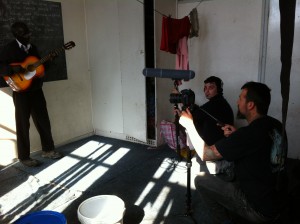
Also listening to Dr David Campbell’s presentation on his research project “Visual Storytelling in the Age of Post-Industrialist Journalism”, once again highlighted that the role of multimedia in journalism is becoming increasingly important.
I believe in the power of story telling as a driving force to connect humanity and thereby make a difference in society. In my work as a writer and journalist, my objective is to document real life stories and to give a voice to those who have otherwise been silenced by history.
I believe there is great strength in collaboration. I see the medium of storytelling evolving into a multimedia space, where the perspectives of photographers, filmmakers, audiographers and writers can combine their work to create powerful and meaningful stories.
May history never turn around and say “we did not know”.
Georgina
October 9th, 2009. Published under Stories. No Comments.
In an earlier blog, I wrote about my first and only encounter with Georgina - “An eloquent and well spoken woman, with gentle eyes and a sad smile”.
We met at the Central Methodist Mission in Johannesburg. She was just one of thousands of people who had fled Zimbabwe - desperate, frightened - and yet hopeful of a better life. The Central Methodist Mission gave her shelter, but the conditions were cramped and desperate, a gate way through which more than 20.000 Zimbabweans have passed through to South Africa - “the promised land”.
She was lucky - she had been offered a job to work on a farm in the Free State. She may have lied about being an experienced farm labour (she is well educated in computer science), but who would not have lied to get off the streets of Johannesburg and escape poverty.
But what she had hoped would be a positive twist of fate, has turned out to be her nightmare. She is trapped, she works long hours, she has to work for her food, and barely has enough money to feed her baby.
She needs out - and the only hope she clings to is my mobile number. I have sent emails out to friends asking if anyone is willing to take the risk of offering Georgina a chance for a better life. She needs employment.
A secretary, a receptionist, a nanny - she will take what she is offered, as long as is does not undermine her dignity.
She is the victim of a regime that has forced her to flee her country and she now finds herself trapped in a life that is desperate and out of her control.
Writing this book, Remarkable South Africans, has been a humbling and deeply moving experience - not only in terms of the inspiring people I have met, but mostly in the generosity and support that has been offered to me to make it possible.
I see Georgina’s story, and her life, as an opportunity to contribute and give back to this ever spinning circle of life.
This is her plea:
“How are u line? Line even if u can get me the job as a nanny i will do it. I’m suffering. Georgina” SMS received 5 October 2009
This story still needs an ending…
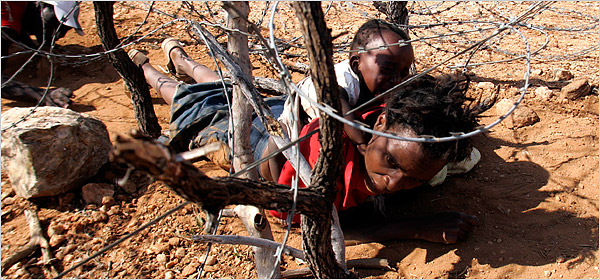
A Zimbabwean woman with her child on her back flees across the border into South Africa at Beitbridge Border Post in Musina, South Africa. More than 1,000 people every day are fleeing Zimbabwe for South Africa.