Archive for 'Nominees'
TEDxBerlin talk - September 2013
December 10th, 2013. Published under Nominees. No Comments.
A pursuit into the lives African migrants living in the dark underworld of the inner city of Johannesburg.
As political and economic tides change across the African continent, Johannesburg stands as a beacon of opportunity; its bright lights are often blinding to the reality and hardship of the every day struggle for survival.
Each day thousands of forced migrants flood into Johannesburg in search of a better life. Many have risked their lives to cross South Africa’s borders, but on arrival face violence, discrimination and oppression, and in their desperation, individuals forsake their identity, their rights, and their health to survive.
Finding work dictates where people live, and they often resort to the only accommodation they can afford: the slum buildings of the inner city of Johannesburg.
The City of Gold
“Cry, the beloved country, for the unborn child that is the inheritor of our fear. Let him not love the earth too deeply… For fear will rob him of all if he gives too much.” Alan Paton
Johannesburg was built on the backs of mineworkers who, over a century ago, migrated from the rural areas to the city to work in the goldmines.
The city’s highrise buildings and skyscrapers are testimony to its wealth and prosperity, ranking the city as amongst Africa’s wealthiest and most modern cities – the city of gold.
However in the late 1980’s, South Africa was approaching the end of the dark era of Apartheid, where South African society had been segregated according to race: where the majority black population in South Africa had been oppressed and dominated by the minority white population.
Many white-owned businesses in the inner city of Johannesburg began to flee the city, and move their offices to other suburbs of Johannesburg. They literally emptied their buildings, locked the door and moved out, leaving behind a “ghost town”.
But what is a ghost town without it ghosts? The empty buildings soon became occupied, as people started moving into the buildings. What used to be old offices and boardrooms were subdivided and converted into people’s homes, as the city’s poor and destitute sought shelter in the abandoned buildings.
The Slum Buildings
According to Médecins Sans Frontières, there is an estimated 1300 slum buildings in the inner city of Johannesburg. The buildings vary in their scale of deterioration and level of basic infrastructure, but all face challenges of access to water, electricity and cleanliness.
Some of the slum buildings are hijacked buildings. Property owners have lost control of their buildings, the buildings are overcrowded, the lack of management have seen buildings deteriorate and become vandalised and many of the buildings are run by slum lords and gangs, who demand rent from tenants although in many cases there is no running water, electricity or cleaning of the buildings.
The buildings are overcrowded, where the fight for survival is brutal and unrelenting; many of the residents are desperately poor, and each day is a struggle to survive. The people who live in the buildings are both South Africans and foreigners. Many are refugees who have crossed the border illegally; they fear deportation and police brutality, and therefore choose to become “invisible”- which makes them more vulnerable to abuse, violence and discrimination.
Many live under the constant threat of eviction and fear confrontation with the police. Living in the shadows of Johannesburg, their existence is not recorded and the majority have no documentation to prove their identity.
Although there are no one accurate figures, there are an estimated 250.000 people who live in the “underworld” of the inner city, residing in places that are not suitable for human habitation.
The slum buildings have no cleaning services, there is no sewerage systems, there are rats, there is no water, no electricity - the buildings are like vertical squatter camps, they are dangerous, they are dark and they are considered unsafe, especially for women and children.
The gateway to the underworld
The gateway to the underworld of the inner city lies in an unlikely place – the Central Methodist Church, which is situated in the centre of the city, right beside the High Court in Johannesburg.
The church has a rich and important history in Johannesburg, it is being led by Bishop Paul Verryn, a man who has dedicated his life to fight for the rights of the city’s poor and destitute.
In 2008, there was a wave xenophobic attacks across South Africa, where foreigners were being targeted, beaten, killed and harassed. In response to the attacks, Bishop Paul Verryn opened the doors of his church to the refugees and foreigners, and before he could knew what was coming, some 3000 people flocked into the church for shelter. Those who could not fit into the building slept on the streets outside in front of the church.
The church has become a gateway to the underworld. It is well known across Africa as the first point of entry for refugees arriving in Johannesburg. It is a place of shelter, and is the “eye of the needle” through which one passes into a harsh reality that awaits people in the tough streets of Johannesburg.
The Central Methodist Church has been the social battleground between the Government, the police, human rights lawyers and NGO’s, who have grappled with taking responsibility and dealing with the influx of refugees to the city.
The Solution
Cities are not only built with bricks and cement, by architecture and design – cities are built through the lives of those who live there.
The inner city of Johannesburg is socially complex, politically contentious, and the contest for space, for jobs and survival pushes individuals to extremes.
The solution to the inner city lies in a joint venture between the city’s stakeholders: the City Council, property developers, the private sector, NGO’s and civil society who all have an important role to play in dealing with the preservation of building stock whilst addressing the fundamental human rights of the residents of the inner city.
If Government were to outsource and fund the creative solutions presented by the private sector in servicing the poorest of the poor; and NGO’s delivered solutions to the social needs of those who live in Johannesburg; whilst engaging in the voice of civil society through institutions such as the Central Methodist Church, one would be a step closer to providing a holistic approach to the city, and fulfil the promise of the nation to be a leading African city.
Link to Into the Shadows Trailer:
www.intotheshadows.org
1st Prize, World Press Photo Awards, multimedia online short category
APA, American Photographic Artists – Best Spot News/Editorial Feature
Remarkable Palestinians
November 29th, 2013. Published under Nominees, South Africa, Stories. No Comments.
Some months ago, I was approached by an organisation called NIJMAH* (in Arabic meaning ‘star’) asking about my book Remarkable South Africans. NIJMAH* recognises synergies between the Palestinian struggle for freedom and the South African struggle during Apartheid, and believe that there are lessons to be learned from South Africa that could benefit the Palestinian people.
NIJMAH* asked if would be interested in writing another book? Remarkable Palestinians would be a quest to capture the best of the human spirit in those who strive for peace, freedom and dignity in one of the most complex human conflicts in history.
My immediate reaction was – of course! I have never been to Palestine or Isreal for that matter, and welcomed the thought of a new adventure. I believe that the essence of humanity, the spirit of Ubuntu, can be found in all cultures, amongst all peoples, and being on a quest to seek out the best of human beings is an inspiring and an awakening journey of the mind and spirit.
Soon after, one of the founders of NIJMAH*, Jamila (half German half Palestinian) and her boyfriend Omar (Palestinian) came to Mallorca where I met them for a coffee for the first time. We talked, and shared our vision for creating a book called Remarkable Palestinians, and I soon realised that I knew very little of this complex nation.
I also realised that my life had only ever been exposed to the Isreali perspective. Many of my dearest and oldest friends are South African Jews, a community of people I came to deeply respect, know and admire. I remember feeling like a welcomed outsider; wanting to belong, although my cheese burger and Scandinavian blonde hair only highlighted the invisible religious line that I clumsily stumbled across, only to be escorted back into my side of the territory with a broken teenage heart and questioning if love can truly conquer all?
Jamila and Omar came to stay with us for one night. They are a creative and passionate couple. Jamila played the piano and sang for us, Omar told me about his life growing up in the Arab quarter of Isreal. They are both passionate about Arabic culture, music, film and deeply passionate about expressing the Palestinian struggle through art.
We brought out an atlas and they talked me through history. History always depends on those who write it, and is often interpreted through ones own experience and belief. I felt sobered. Saddened as I listened to stories of lives destroyed, and yet inspired hearing of individuals who rise, who seek peace, who are willing to forsake all to fight for freedom through non-violent means. I felt ignited at the great capacity of individuals to serve humanity – and yet I felt utterly confused.
I had agreed to write and produce Remarkable Palestinians on the condition that my writing would be independent, that I would always remain neutral. But my own words bothered me, as the words of Archbishop Desmond Tutu ringed in my conscience – “If you are neutral in situations of injustice, you have chosen the side of the oppressor.”
I realise that I am stepping into an emotional minefield. I may possibly be forced to take sides, in a battle which is not mine. I am neither Palestinian nor Isreali, neither Muslim nor Jew, and once again will be crossing an invisible line into a territory in which I do not belong. But I do believe that there are human qualities that belong to all of us, and I also believe that being an outsider may just allow me into the hearts of those whose stories I hope to write.
I have been tasked with a great mission – to seek out the best of the human spirit.
I remember, many years ago, deeply questioning my own spiritual journey, confronting what I felt were limitations to Christianity. A scripture in the Bible says: “The only way to the Father is through the Son” which I felt excluded so many segments of humanity. But then a dear friend (a Jewish friend), said to me:
“Jesus is love, right? Then the only way to the Father is through Love.”
The words set me free – and enabled me to understand that if we act and live according to LOVE – then the words Freedom, Peace and Dignity are qualities that belong to all of humanity.
NIJMAH* is crowd funding the first phase of the project. If you want to be involved, follow this way: http://www.betterplace.org/en/projects/15065-remarkable-palestinians-creating-an-inspiring-book-working-title
HAPPY BIRTHDAY MADIBA
July 18th, 2013. Published under Nominees. No Comments.
“I have walked that long road to freedom. I have tried not to falter; I have made missteps along the way. But I have discovered the secret that after climbing a great hill, one only finds that there are many more hills to climb. I have taken a moment here to rest, to steal a view of the glorious vista that surrounds me, to look back on the distance I have come. But I can only rest for a moment, for with freedom comes responsibilities, and I dare not linger, for my long walk is not ended.” Nelson Mandela
No Escape: child slavery
July 10th, 2013. Published under Nominees. No Comments.
The team is back to work – Pep Bonet, Jose Bautista and myself – we are creating a body of documentary work on child slavery in 3 continents.
The first chapter covers child labour in Bangladesh, from where Pep has returned with striking images and moving testimonies. We have spent the last few days building the storyboard, creating a script, editing film, selecting images and piecing together a powerful and heart breaking story, told through the testimonies of children in Bangladesh.
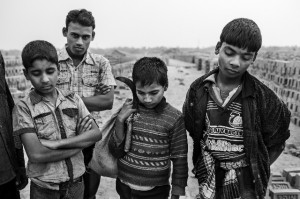
Boys working in a brick factory. Picture by Pep Bonet
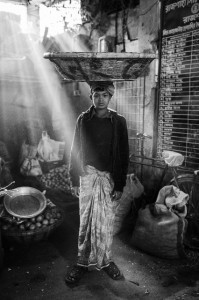
The multimedia documentary tells the story of children who work in brick factories, garbage dumps and as street sellers. In most cases the children do not go to school; their families are desperately poor, and the income that the children bring home secures that the family survives. Child labour is technically illegal in Bangladesh but extremely widespread.
From the busy streets of Dhaka, the story moves into the dark alleyways of Tangail Brothel, which is one of the biggest brothels in Bangladesh.
Inside there are 800 rooms and around 900 commercial sex workers that work and live there, many of them are children and imprisoned against their own will.
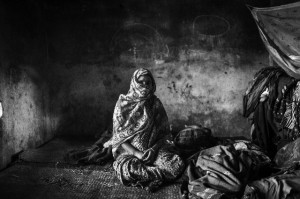
Girl forced into being a sex worker when she was 14 years old. Picture by Pep Bonet
Personal testimonies of the girls who have been sold into the sex trade are almost unbearable to listen to:
“It is unspeakable. Everyday from 7am – 7pm, customers are coming one after another. One customer brought 4/5 persons with him. Another customer brought 3 or 4 persons with him. We also had to do night duties. At night everyone has to take two persons. You cannot sleep. You just have to work. No one is allowed to sleep. If someone went to sleep, she (the boss) beats you.” Moyna was sold into the sex trade when she was 14 years old.
The sex trade in Bangladesh is expanding at an unprecedented pace and touching every strata of society.Over the last decade thousands of Bangladeshi girls were lured under false circumstances and sold into the sex industries in different countries including Bangladesh.
South East Asia is by far the region where slavery is most thriving and culturally complex.
The International Labour Organization (ILO) estimates that there are about 250 million children working worldwide. We have just scraped the surface – the reality of child slavery is widespread and culturally complex, and prevalent closer to home than any reader of this blog would like to believe.
We will be using the Bangaldesh multimedia documentary to launch the project, and use it to look for funding to cover an in-depth initiative that aims to document child slavery across 5 countries in 3 continents.
This is a story told by children who live in realities from which there is no escape.
Syria - “Gift of the Givers”
April 18th, 2013. Published under Nominees, South Africa. No Comments.
Imtiaz Sooliman, Founder of Africa’s largest disaster relief organisation “Gift of the Givers”., and also one of the inspiring individuals featured in my book “Remarkable South Africans”, together with his team continues to touch lives across the globe.
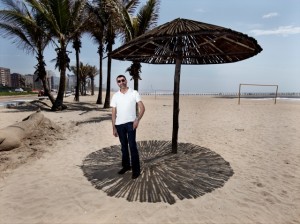
Imtiaz Sooliman, Founder of "Gift of the Givers" | Picture by Pep Bonet
This week “Gift of the Givers” has sent a medical team to Northern Syria, and Imtiaz Sooliman has sent out this moving letter documenting their experiences:
“Dear Recipients
The mood of the medical team is upbeat, slowly having coming to terms with the continuous sound of shells and the staccato of gunfire around the city in these last few days. This is Day three; the anticipation and the excitement to serve and save enhanced by the vehicle congestion in the streets and the throngs of people in the hospital foyer. They came in their numbers from all over North Syria; the word is out that the foreign medical team has finally arrived. The theatre cases line up, children, dental and non-emergency cases re-directed to our new outpatient clinic opened 24 hours previously, women in droves wait for the gynae; the casualty area is already flooded, field teams report huge numbers from the satellite clinics we’ve set up. There is a hive of activity, the excitement palpable with every patient tugging at our sleeve as a desperate population eagerly seeks quality health care disrupted by two years of ongoing civil conflict. The medical team are in their element, overjoyed and content. This is what they came for, to serve with distinction, to bring hope and to heal physically and emotionally. In less than 48 hours more than 500 patients have already been treated including the delivery of twins and several surgical procedures.
The rhythm and calm ominously interrupted by a traumatic, unfortunate emergency; a child has been shot in the chest by accident. Our trauma team calmly steps in with frenetic reaction time, all the protocols are followed as this is what we do best. The seconds tick by, for the father an eternity as he holds the ankles of his child lovingly with that tear-jerking look on his face. Oh! that look. We gently move him away as realisation dawns that we’ve lost the child. Words cannot describe the anguish of the mother, her body language, her wailing and the pain. The wind is knocked out of our sails, we lose momentum. Our day is messed up. We sit down, this is a day of great sadness for us but a very normal day for the Syrian people who lose 200 lives daily. The emotions have to be postponed; people want to be healed, lives have to be saved. We hasten back to work.
Imtiaz Sooliman
Darkoush
Northern Syria”
Oscar Pistorius: our fallen angel
February 22nd, 2013. Published under Nominees, South Africa. No Comments.
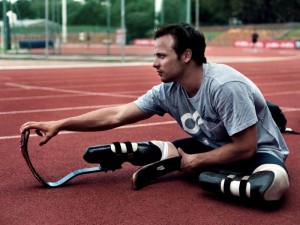
Picture by Pep Bonet
I write these words with bated breath. Live twitter updates are rolling in on my screen from the court room where Oscar Pistorius applies for bail after being charged with murdering his girlfriend, Reeva Steenkamp.
The media hype around Oscar Pistorius has captivated me, and most of the world, every day since that fateful morning 14 February 2013.
I can’t help but ask: what is it that makes me ache with regret, and pity, and deep sadness for Oscar Pistorious. I feel a sense of guilt just writing these words, because my heart should lie with Reeva, her family and their loss! And it does – they have lost their angel, and their mourning has been silent and gracious.
However, Oscar dominates my thoughts, my dreams, and in my quiet moments I ask the hands of the universe to hold him.
On the same day that Reeva got shot, I was dancing alongside women across the globe in celebration and awareness of the “One Billion Rising” campaign against abuse and violence against women. And yet, my thoughts lie with a man who once again turned the woman he loved into his victim, and fatally shot and killed her.
Why on earth should I care for him?
I try to find an answer in the fact that he is someone I have personally met. Someone I liked and admired, who features in my book “Remarkable South Africans” – a documentation of inspiring individuals who have contributed to humanity and uplifted the nation. He deserved his place amongst the very best of our citizens.
We built him a pedestal in the sky, we sang his praises, we believed in him, we invested our identity in his success and glowed with pride to see him carry the South African flag - and so even greater is the fall, dragging us with him as he tumbles.
I curse him for his carelessness, for his brutality – and yet a silent part of me hopes, prays, that Reeva’s death is a result of a foolish mistake, and not premeditated murder.
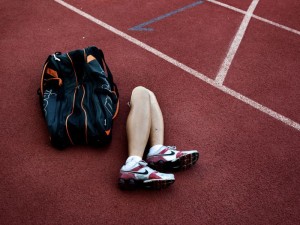
What society have we created that “sanctifies” violence? Do the guns we carry to protect ourselves, instead place the lives of our loved ones at risk? Have we forgotten the promise of Mandela as we see our heroes turn to beasts? And what of the women – our mothers, our sisters, our little girls - every 17 seconds a woman is raped in South Africa, and by the time you have read this article at least 7 women have suffered the greatest violation of their bodies and spirit by a man.
Oscar Pistorius will pay his price – he already has - and this is just the beginning of a long dark road that lies ahead of our “fallen angel”.
And may Reeva’s death echo the words of the poem “Still I rise” by Maya Angelou
You may write me down in history
With your bitter, twisted lies,
You may trod me in the very dirt
But still, like dust, I’ll rise.
Does my sassiness upset you?
Why are you beset with gloom?
‘Cause I walk like I’ve got oil wells
Pumping in my living room.
Just like moons and like suns,
With the certainty of tides,
Just like hopes springing high,
Still I’ll rise.
Did you want to see me broken?
Bowed head and lowered eyes?
Shoulders falling down like teardrops.
Weakened by my soulful cries.
Does my haughtiness offend you?
Don’t you take it awful hard
‘Cause I laugh like I’ve got gold mines
Diggin’ in my own back yard.
You may shoot me with your words,
You may cut me with your eyes,
You may kill me with your hatefulness,
But still, like air, I’ll rise.
Does my sexiness upset you?
Does it come as a surprise
That I dance like I’ve got diamonds
At the meeting of my thighs?
Out of the huts of history’s shame
I rise
Up from a past that’s rooted in pain
I rise
I’m a black ocean, leaping and wide,
Welling and swelling I bear in the tide.
Leaving behind nights of terror and fear
I rise
Into a daybreak that’s wondrously clear
I rise
Bringing the gifts that my ancestors gave,
I am the dream and the hope of the slave.
I rise
I rise
I rise.
1st Prize - World Press Photo - Multimedia
February 2nd, 2013. Published under Nominees. 1 Comment.
Today has been a good day!!
Our multimedia “Into the Shadows” won First Prize at World Press Photo Awards, “online short” category.
Our hope is that this important story will help shine a light “into the shadows” of the inner city of Johannesburg.
I feel honoured to be part of such a great team - Pep Bonet and José Bautista
Despite the loss, the despair, the violence and the hopelessness, we have been deeply moved by the calibre and integrity of the people we have met. The resilience, the sacrifice, the intellect. The poor are neither uneducated nor ignorant. They are resourceful, they are sceptical, they are articulate and the vast majority have hit the ground running and are desperate to live, to be respected and to be given the opportunity of a better life.
Humanity
January 17th, 2013. Published under Nominees. No Comments.
“There is only one way in which to endure man’s inhumanity to man and that is to try, in one’s own life, to exemplify man’s humanity to man.” Alan Paton
Meet Ruth
November 1st, 2012. Published under Nominees. 1 Comment.
“I love children and don’t want to see them suffer. It’s better if they come here.”
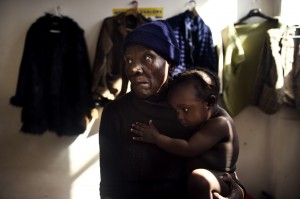
Ruth Manyike, refugee from Zimbabwe
In 2008, 53-year-old Ruth Manyike fled Zimbabwe. Her home was burned down by President Mugabe’s government supporters, and in her desperation she left her home and came to South Africa. Ruth arrived in Johannesburg with no money and no place to go. Along with many other forced migrants to the city, Ruth sought shelter in the Central Methodist Church, where the acting Bishop Paul Verryn opened his doors to refugees and the poor.
More than four years later, Ruth now lives on the eighth floor of a slum building in central Johannesburg - a building with no facilities; no water, no electricity.
Ruth speaks of her love for children, and how she worked as a child-carer in Zimbabwe. Although she feels that all has been taken from her, her compassion remains and so she has started her own informal child care centre in the building in which she lives.
Many of her neighbours in the building are blind or live with various physical disabilities. They find support in each other’s company by living together. The idea of creating a child care group came to her as she observed children of blind parents, being taken with them into the streets each day as the parents would beg at traffic lights and street corners. She offered to care for the children, saying:
“I saw the parents go down with the children in the morning. I asked them why they were taking the children with them, and they said that they wanted to go and beg for money, for food and clothes. I told them just because they cannot see, does not mean the children must suffer. Leave them with me, I will feed them what I have, and then you can come and collect your children in the evening.”
And so Ruth’s child care group was formed. She started with seven children, but word soon spread and she now takes care of 20 children in her room which stands empty during the day, but which she shares with up to five families at night.
“I tell the parents to pay me what they can,” she says. “I buy food for the children. In the morning they get porridge and tea. At one o’clock I give them food and after that, they nap. Then once they wake up, they are washed, smartly dressed, and the parents then collect them.”
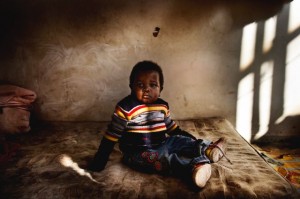
Children of the shadows
One senses the tension the moment one steps into the building and begins climbing the stairs to the eighth floor. The inside of the building is dark and stripped to its core, as rats scatter along the corridors and feed on the waste. However, the moment one steps out of the darkness into Ruth’s informal child care centre, the tension releases, as natural light streams through her windows and one is welcomed by a tumble of toddlers and children’s voices. Shy faces peek out from behind Ruth’s skirt, as the bolder children come to hold your hand with bright faces and a trusting smile.
Ruth is welcoming. She shares her story, and the challenges she faces. In the corner of the room she has buckets lined with newspaper set up as toilets for the children. Waste is carried down to bins on the street. She has a large plastic tub to bathe the children each day, and takes pride in ensuring they are fed and well kept and presentable when the parents come to collect them.
Ruth sings and dances together with the children, teaching them to count, learn letters and sing songs in English. The children range from a few months to five years old.
Ruth lives under the constant threat of eviction, as the landlord of the building demands that she pays rent for the room. She says she cannot afford what he is asking, and refuses, as there is no water, no electricity or security in the building. She guards her space with fierce determination for the sake of the children, as she confronts the constant threat of her room being hijacked from her.
Ruth is one of those silent heroes of society, a remarkable woman whose life of struggle is carved deep into the lines of her face; but her determination, her love and her calling to care for the children of the shadows can be seen in the depths of her eyes. The children who have passed through her hands will always know what it means to be loved.
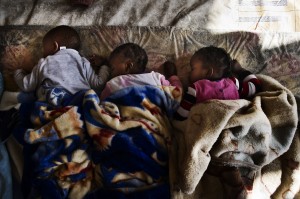
Children sleeping, in the care of Ruth Manyike
PICTURES BY PEP BONET www.pepbonet.com
“I will tell your story…”
October 17th, 2012. Published under Nominees. No Comments.
“I will tell your story if you try
but how long will your thoughts
of valleys stay green
when the world you were born in
changes with seasons
Will you run with this dream, will you run along
or will you run against and finally reveal
why some die young”